


One year ago, I wrote a note titled “The Time to Invest Is When Things Feel the Worst.” The article used charts to show that, 12 months after the most bearish periods (when Americans were collectively most concerned), the stock market averaged 25% returns.
Looking back, this was a good call. We’re now 12 months later, and the S&P 500 has climbed another 36%.
But the good returns haven’t done anything to make people less depressed.
This week, the Federal Reserve’s measure of US worker satisfaction fell to its lowest level since the survey began in 2014.
Last week, consumer sentiment had fallen to the lowest level ever recorded in the 70-year history of the University of Michigan economic survey.
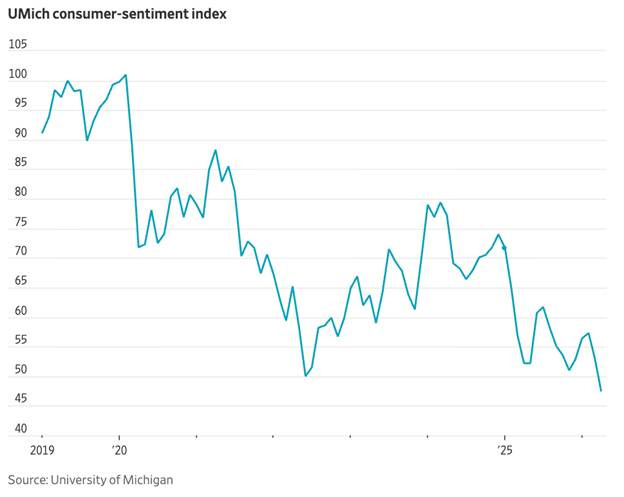
Why people continue to be sad is beyond the scope of this article. (For that discussion, see Derek Thompson’s article If America’s So Rich, How’d It Get So Sad?)
But counterintuitively, the fact that people remain sad supports the idea that the stock market is still a good place to invest.
When the market feels safe, investors tend to take more risks. Rising prices beget more confidence, and more confidence begets higher prices. Optimism creates bubbles, and bubbles lead to crashes.
But when investors have as little confidence as they do today, even bad news can make the market go higher. All it takes is for that bad news to be just a little less bad than expected.
Personal Note:
A few weeks ago, my wife brought home a foster dog she named Junebug, along with her two puppies.


Junebug is an amazing dog who was rescued from a very bad situation. When we brought her to the vet for a checkup, the doctor found that she was highly heartworm positive with BB pellets in her skin. But she somehow still loves people and will be going to her new family in Washington state in a couple of weeks.
Thanks !
When it comes to writing about investments, the disclaimers are important. Past performance is not indicative of future returns, my opinions are not necessarily those of TSA Wealth Management, an SEC-registered investment advisor, and this is not intended to be personalized legal, accounting, or tax advice etc.
For additional disclaimers associated with TSA Wealth Management please visit https://tsawm.com/disclosure or find TSA Wealth Management's Form CRS at https://adviserinfo.sec.gov/firm/summary/323123