


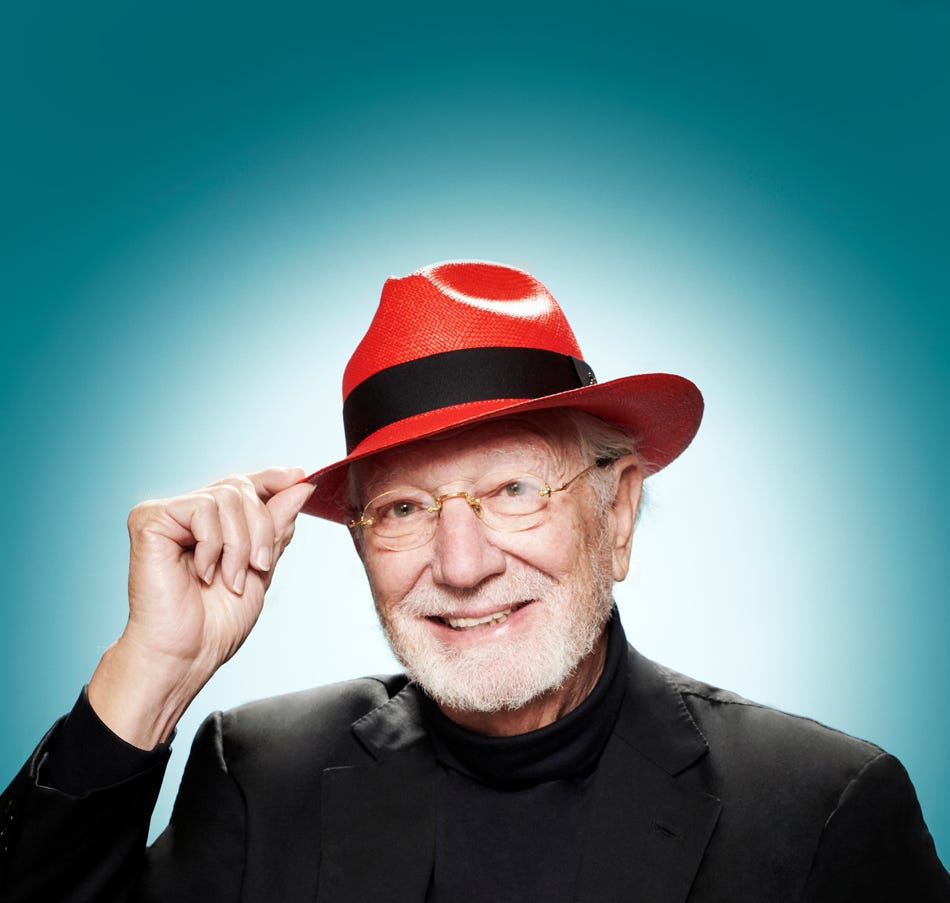
Back in 2019, Forbes published an article titled, The Greatest Investor You’ve Never Heard Of: An Optometrist Who Beat The Odds To Become A Billionaire
It’s a great article that tells the story of how Herbert Wertheim built a multi-billion-dollar fortune through decades of disciplined buy-and-hold investing. He bought companies like Apple, Microsoft, and Heico in their earliest days and never sold.
This type of return seems impossible until you remember that, at the time of this article, Herbert was 79 years old and still working his day job. If a 79-year-old today invested $10,000 in Berkshire Hathaway when he was 18 (and never invested another penny), those shares would be worth $412 million today. This is what can happen when you have annualized returns of roughly 19.8%.
But Herbert spent his life consistently investing. If he had contributed $1,000 / month to an account earning 19.8% per year for 61 years, he would have deposited $732,000 and would be worth $9.6 billion today.1
That all seems easy enough in principle, but most investors don’t have the skill, patience, or confidence to be like Herbert Werthman.
Take this anecdote from the end of the article. By the publication date in February of 2019, Herbert had accumulated 15 million shares of GE and was picking up more.
“They hit an all-time low yesterday, and I’m getting hurt. But I feel very, very comfortable with GE because of their technology.”
The position described would have been valued at roughly $750 million. And despite the huge gamble, more than three years later, I can look at the stock chart and estimate that his return had been close to 0%. However, if he continued holding until today, he’d be up around 571% with annualized returns of nearly 30%.
From $750 million to $4.2 billion over the course of 7 years. Not a bad trade.
The Big Caveat
I have no idea if he continued to hold. Forbes lists his net worth today at $4.4 billion, and midway through the article, it says that not all of his trades are winners and that Wertheim “Will generally sell if a position reverses on him by 25%.”
So, it is entirely possible he exited the trade before it could work.
But either way, I bring this up because I think there are a few important lessons here:
Time is the most underrated variable. The math only works because Herbert was 79. Most people see the billions and think “great stock picks.” The real engine is six decades of compounding. Have your kids and grandkids start investing early and never stop.
Conviction without action is worthless. Plenty of people knew about Apple and Microsoft early. Herbert bought and held. The behavior is what made him rich, not the insight.
Patience is the hardest and most valuable skill to develop. Most investors would have rotated out of GE into something “working.” The people who can tolerate that kind of pain (or boredom) are rare. As I wrote back in January (Even the Best Investments Hurt), the best buy-and-hold stock investments of the last 40 years experienced average declines of 72% along the way, giving investors ample opportunities to shoot themselves in the foot.
Don’t interrupt compounding unnecessarily. Every time you sell to “take profits,” rebalance emotionally, or chase something new, you reset the clock. A lot of Herbert’s edge came from having good insight and then simply being able to stay the course.
Even legends have blind spots. His 25% stop-loss rule could have cost him billions had it caused him to exit some of his positions early. Rules that protect you in bear markets can also eject you right before a recovery. There’s no perfect system.
The strategy has to match the person. Herbert’s approach worked for Herbert. For most investors, a simpler, lower-volatility approach they can actually stick to will outperform a theoretically superior strategy they abandon at the wrong moment.
Ultimately, great investing is less about intelligence than it is about behavior. The math is easy. Doing nothing while your $750 million position bleeds is not.
Personal Note:
We took the kids down to Crystal Beach for Memorial Day weekend, and it was the first time I’ve seen a gator swimming in the surf.

Galveston isn’t for everyone.
The same investment, which only earned an annualized return of 10%, would be worth $52 million today instead of $9.6 billion. An investment that only earned 5% would be worth $4.8 million. Small changes add up over time.
When it comes to writing about investments, the disclaimers are important. Past performance is not indicative of future returns, my opinions are not necessarily those of TSA Wealth Management, an SEC-registered investment advisor, and this is not intended to be personalized legal, accounting, or tax advice etc.
For additional disclaimers associated with TSA Wealth Management please visit https://tsawm.com/disclosure or find TSA Wealth Management's Form CRS at https://adviserinfo.sec.gov/firm/summary/323123
Very interesting