


We are now at the point in the bull market where people in or approaching retirement tell me stocks no longer scare them because the long-term average has been so good, and stocks may go down but always recover.
While I’m all for long-term optimism, the short term still matters, and proper planning still requires some amount of caution.
Difference Between Accumulating & Spending
When someone describes a portfolio that will accumulate over time, the order of gains and losses doesn’t affect the outcome.
Take this hypothetical from the Trump account website as an example:
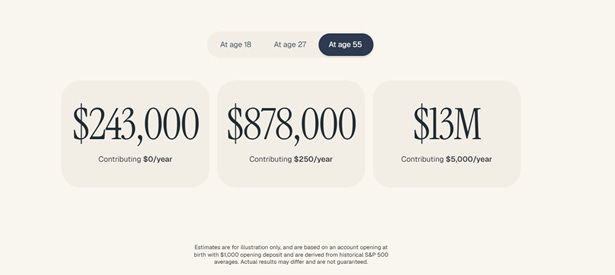
Put $1,000 in when a child is born, and it will be worth $243,000 by the time they are 55 if returns are historically average over the long term.
It doesn’t matter whether any particular year is good or bad. The long-term average is the only thing that counts.
However, that changes once an investor begins making regular withdrawals.
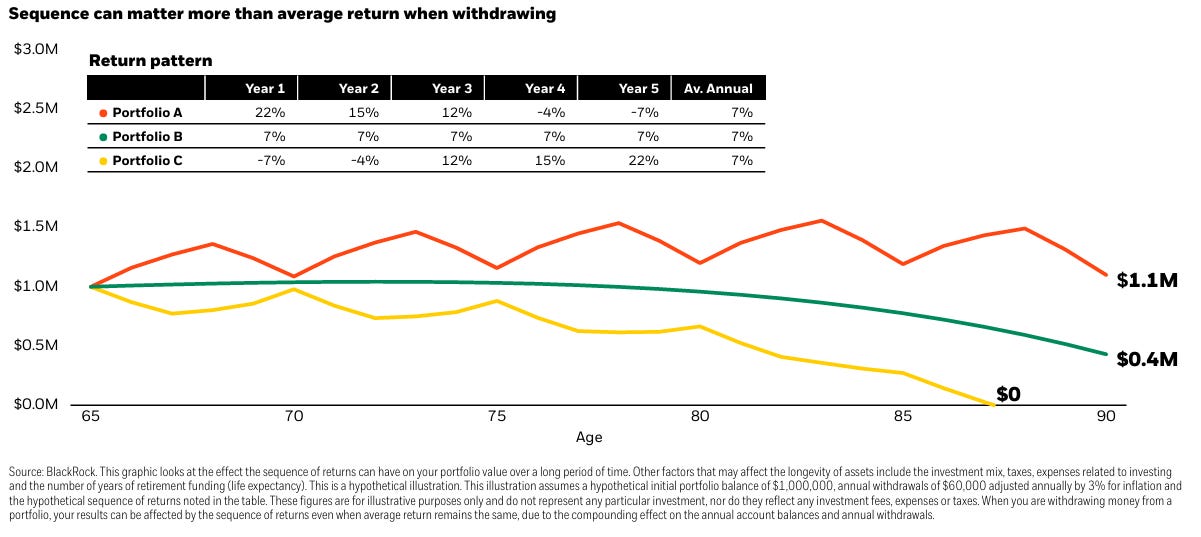
The three portfolios in the chart above all start with $1 million, have the same average return of 7%, and withdraw $60,000 plus inflation each year. The orange-line investor, who benefited from large early gains, had a wonderful retirement. The yellow-line investor, who suffered large early losses, ran out of money.
There are two primary solutions:
Maintain a sufficient emergency reserve you can use in a downturn.
Create a flexible spending plan that allows you to reduce expenses when your portfolio declines.
Neither option feels good or necessary when the market is going higher, and neither will prevent the next bear market. But when the stock market has its next major decline, you’ll rest a little easier knowing you have a plan.
Personal Note:
Last weekend I was in DC for my fantasy football draft with friends from law school.

I may have picked a terrible team, but I had a great time doing it.
This definitely helps with my wife & I - Thanks - very much appreciated
When it comes to writing about investments, the disclaimers are important. Past performance is not indicative of future returns, my opinions are not necessarily those of TSA Wealth Management, an SEC-registered investment advisor, and this is not intended to be personalized legal, accounting, or tax advice etc.
For additional disclaimers associated with TSA Wealth Management please visit https://tsawm.com/disclosure or find TSA Wealth Management's Form CRS at https://adviserinfo.sec.gov/firm/summary/323123